


Senaka* Scan: 3D Screening System for Adolescent Idiopathic Scoliosis (AIS)
SMILE CURVE Inc.

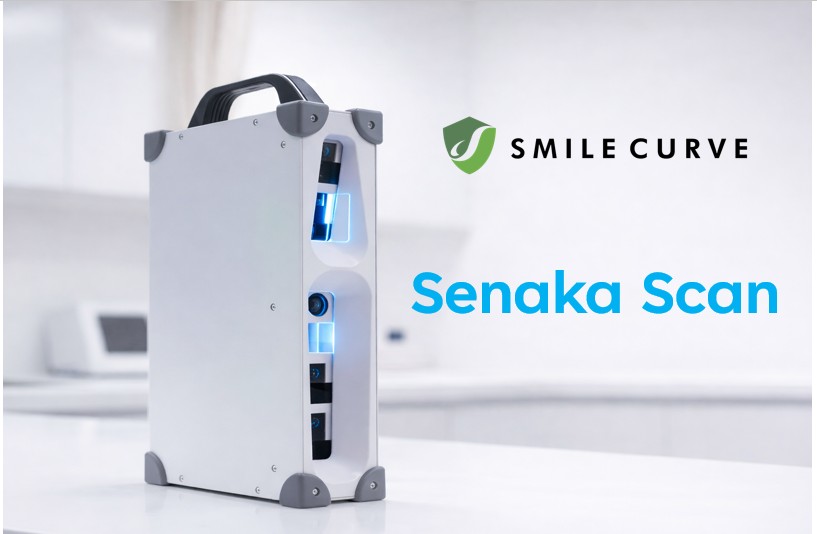
Senaka Scan

Senaka Scan

50,000 Children Undergo Surgery Every Year: Early Detection During Adolescence is Critical

Scoliosis is a three-dimensional curvature of the spine. It affects an estimated 2-3% of children and often progressing rapidly during adolescence. If left undetected, it can lead to chronic pain and long-term respiratory complications, making early detection critical. However, traditional screening methods, such as visual and physical examinations, rely heavily on practitioners’ experience, often missing early-stage cases, while X-ray carry radiation risks that limit how often they can be used. SMILE CURVE addresses these challenges with a radiation-free 3D scanning system designed for use in schools and clinics. Our system allows practitioners to regularly measure and monitor children’s spinal changes for early scoliosis detection. Early detection enables timely, non-invasive treatments such as bracing before surgery becomes necessary. We are dedicated to early scoliosis detection and help protect each child’s long-term health and well-being.

*"Senaka" means "human back" in Japanese.
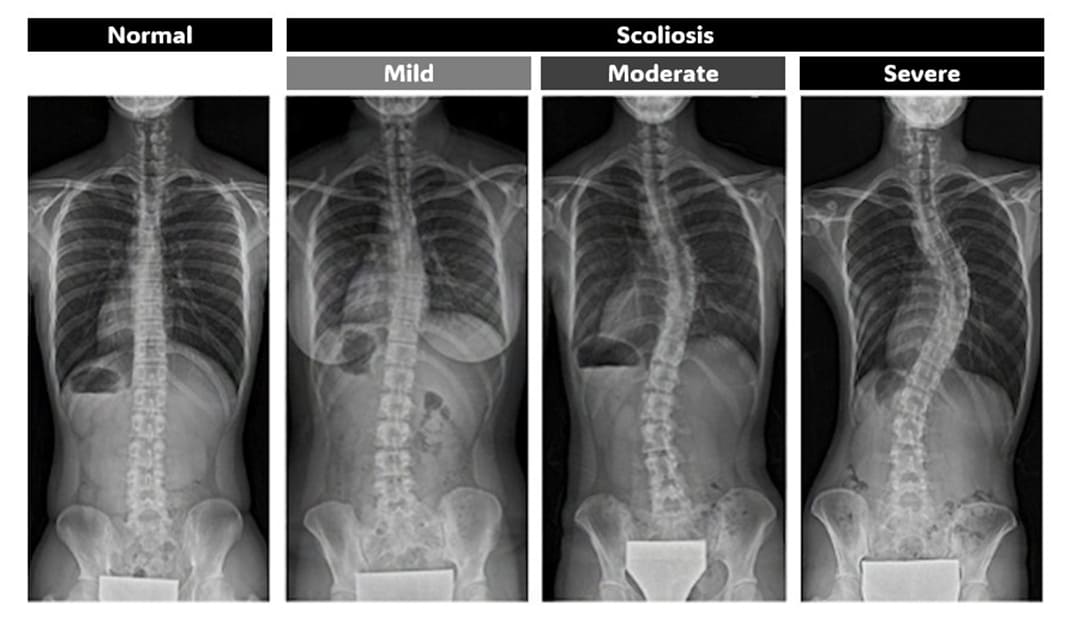
X-ray image of the spine and scoliosis

X-ray image of the spine and scoliosis

Zero Radiation: Revolutionizing Early Detection with a One-Second Back Scan
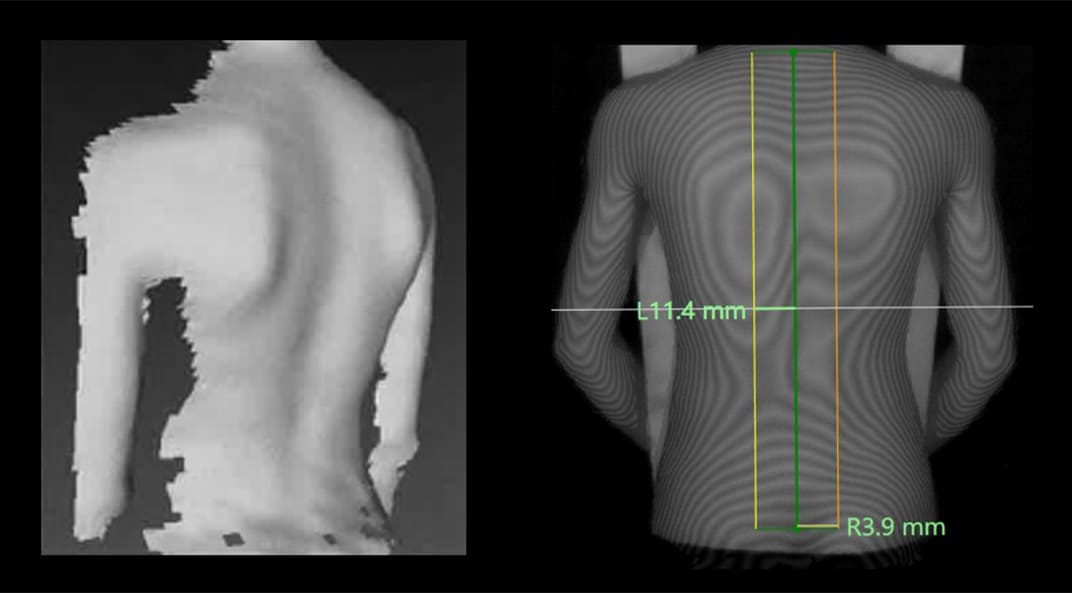
Our radiation-free screening system, powered by advanced 3D surface scanning, captures a detailed image of the back in just one second. By converting surface deformities caused by spinal rotation into precise 3D data, we achieve millimeter-level quantitative evaluation. This technology detects mild cases invisible to the naked eye and simplifies tracking progression over time. For physicians, it serves as an effective triaging tool, identifying cases that truly require X-ray imaging and improving overall diagnostic accuracy. For students and parents, the process is painless and stress-free. Its compact, lightweight design allows for seamless integration into school screenings and community health checkups, making consistent monitoring throughout adolescence a practical reality.
Body Surface Data Captured by Senaka Scan

Body Surface Data Captured by Senaka Scan

Fusing Japan’s Proven Moiré Topography with Proprietary 3D Body Scanning
The SMILE CURVE system modernizes Moiré topography, a screening method with a 50-year track record in Japan, using the latest digital technology. While traditional Moiré methods required bulky equipment and complex manual interpretation, our new system was developed through strategic collaboration with Keio University Hospital, the Tokyo Health Service Association, and 3D camera pioneer Space Vision. Weighing less than 11 lbs (5 kg), this portable scanner captures high-precision 3D data in one second with an accuracy of ±1 mm. The software visualizes surface asymmetry and automatically extracts deviations, allowing doctors to make instant, data-driven assessments. By blending clinical heritage with advanced 3D analytics, we empower healthcare providers to deliver high-quality screenings anywhere, for anyone.
SMILE CURVE and Our Partners

SMILE CURVE and Our Partners

Proven in Japan: Leading the Global Digital Revolution in Scoliosis Screening

Developed as a medical device with support from Japanese government agencies like NEDO*1 and AMED*2, our system is already a proven success. In Japan, 130,000 children are screened annually, with scoliosis identified in 2-3% of cases. By enabling detection at a much earlier stage, we have accelerated the adoption of early intervention via bracing and physical therapy. This challenge is universal. While over 20 countries and 26 U.S. states conduct screenings, most still rely on visual exams that fail to catch early progression. Recognized by prestigious accelerators like the Mayo Clinic* Platform (USA), we are now preparing for our global market launch. We are looking for strategic partners to join us in transforming health screenings worldwide through the power of 3D technology.

*1 NEDO is the abbreviation for the New Energy and Industrial Technology Development Organization, a government-affiliated agency that supports innovative technology development to address energy and global environmental challenges and strengthen industrial competitiveness.
*2 AMED is the abbreviation for the Japan Agency for Medical Research and Development, a government-affiliated organization that promotes medical R&D from basic research through implementation to help build a society of healthy longevit.
*3 Mayo Clinic is a premier U.S. non-profit academic medical center that attracts patients from around the globe.